
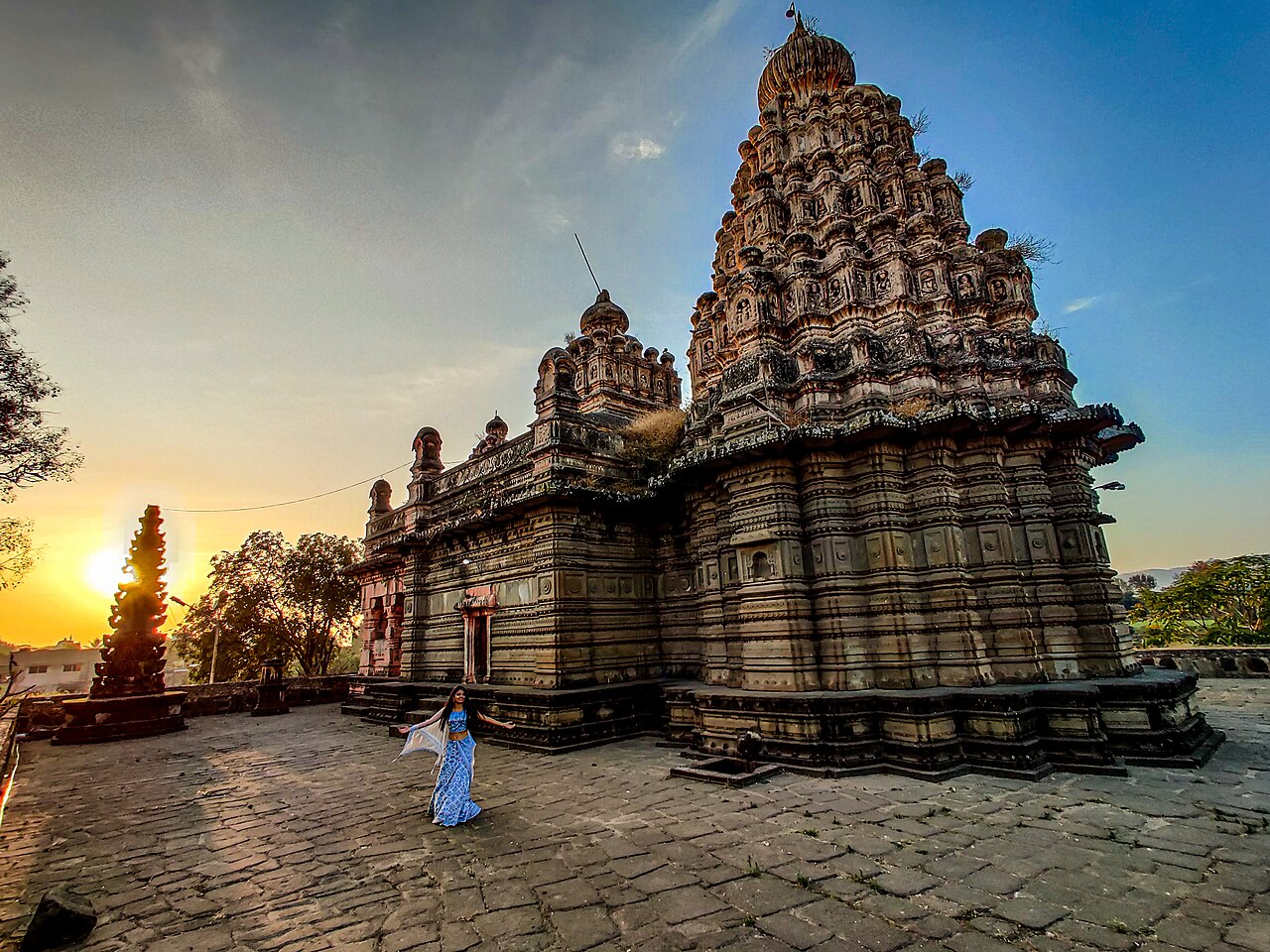
Sangameshwar Temple in Saswad
Decide between the river temples and the fort
The easiest way to plan this outing is to pick a theme. For riverside architecture, visit the Sangameshwar and Changavateshwar temples in Saswad. For Maratha history and time on a hill, make Purandar Fort the main visit. Adding one Saswad shrine to a fort trip is possible if access and the pace of your group allow it.
From Hotel Malhar Empire, the mapped road arrival is 17.4 kilometres for Sangameshwar and 16.8 kilometres for Changavateshwar. Purandar’s approach is 29.7 kilometres from the hotel. These are separate road distances from the same starting point. For travel between the stops, plan the leg in your map app from the place where you are actually standing.
Sangameshwar Temple and the river confluence
Begin near the temple lane and bridge. Sangameshwar stands on land formed at the meeting of the Karha and Chambli rivers. From the upper approach, you can see why the confluence, the stone ghats and the shrine are understood together. An older account of Saswad describes the temple’s three spires above the water near its bridge.
Walk close enough to see the bands of carving and the changing profiles of the towers. If conditions on the steps are poor or the water is high, the upper approach still gives a view of the rivers. Allow some time to look from the side of the precinct, where the raised stone base is easier to distinguish.
Changavateshwar and the figures in the stone
A short drive away, Shri Changavateshwar Mandir has a different relationship with the Karha. The temple is associated with Changdev and is known for its stone assembly hall. Near the entrance, take in the lamp towers and carved Nandi. Inside the accessible areas, look for dancers and wrestlers among the figures carved on the pillars.
Both sites are Shiva temples, and each makes a different part of Saswad’s heritage visible. At Sangameshwar the river confluence explains the choice of setting. At Changavateshwar, the sequence from the approach to the pillared hall brings attention to how a visitor moves towards the inner shrine.
If Purandar Fort is your priority
Purandar is remembered for the Mughal siege of 1665, Murarbaji Deshpande’s defence and the treaty that followed. It is also the birthplace of Chhatrapati Sambhaji Maharaj. On the accessible route, look for how gates and ramparts use the ridgeline and how the lower terrace relates to the upper citadel.
Confirm admission and photography arrangements before setting out. The fort is under military administration, and visitors should carry government photo ID. Set aside time for the uphill walk and follow the instructions on which parts of the fort are open.
Compare the stops by walking effort and access
For a group that wants to spend its time looking at stonework, the two Saswad shrines offer different kinds of visits. At Sangameshwar, start with the view near the bridge and go down to a riverside level only if the route is appropriate. At Changavateshwar, spend more time in the accessible pillared spaces and the enclosure. Confirm local conditions if steps or uneven ground are a concern.
Purandar requires a different plan because the fort’s approach and available areas can change with administration and conditions. If the fort visit is limited that day, keep the two Saswad shrines as a complete alternative. Give each of them enough time to walk around and take in the features described in the destination guides.
Use a separate arrival pin for each stop
Sangameshwar’s route ends near the river bridge. Changavateshwar’s map marks an approach off the Saswad–Kapurhol Road. The temples share the Karha landscape, so searching for a generic Saswad river temple can cause confusion. Send both names and directions to the driver when planning a two-temple outing.
If you are starting from a hotel in Jejuri, choose the first stop before leaving. Hotel Malhar Empire provides a common start for the three published road distances. Each number applies to one route from the hotel. For the distance or time between two attractions, use the first attraction as the starting point in live navigation.
An order that works from Jejuri
For a temple-focused day, see both Saswad shrines with time for a break between them and return to Jejuri without a fixed fort stop. For a fort-focused day, check Purandar’s access first and plan one Saswad temple afterwards if the group has time. Use the individual destination routes to arrive at the correct approach.
With a group interested in architecture, give Sangameshwar time from the outside and Changavateshwar time under the pillared roof. That order gives you a wide view of the rivers early in the day and a closer look at the carving afterwards.