
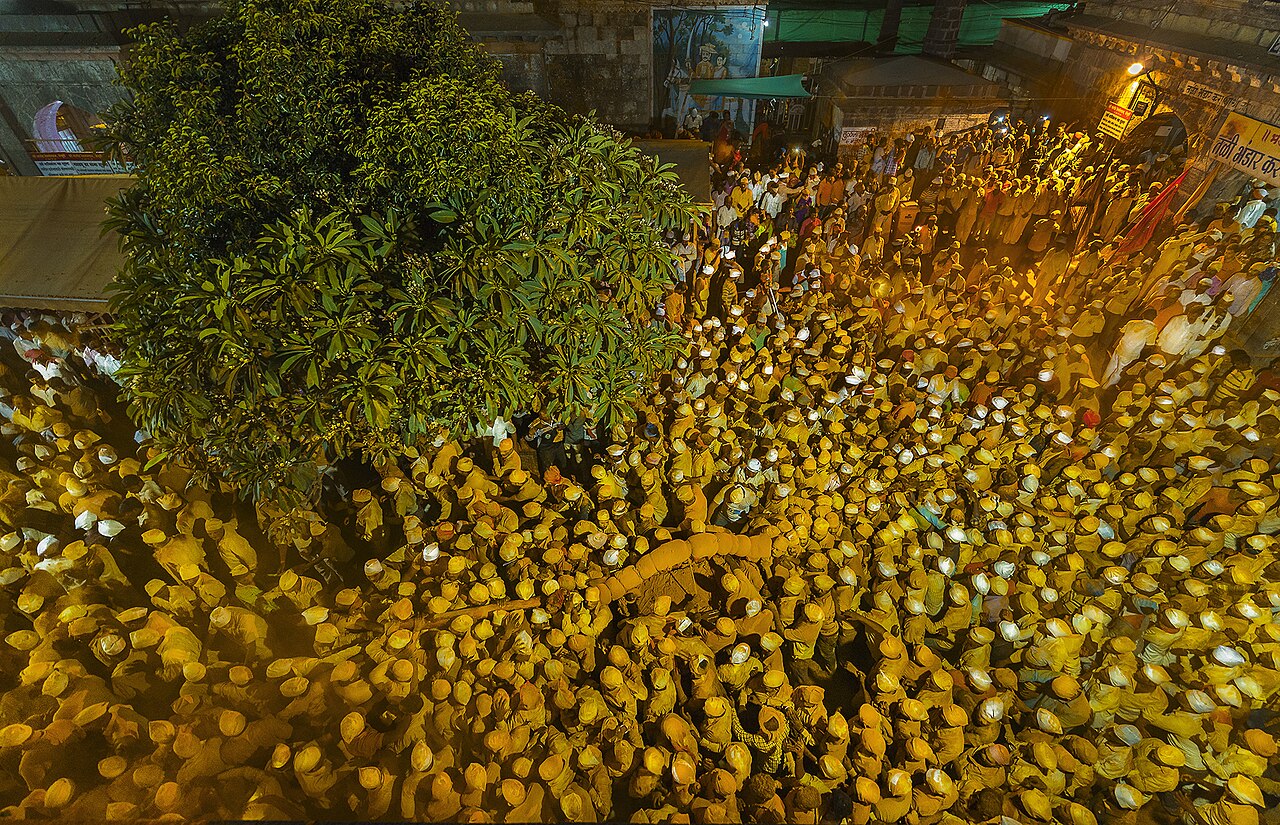
The Somvati Palkhi gathering at Jejuri
Why Jejuri turns gold
At Jejuri, turmeric is offered to Khandoba as bhandara. During major gatherings, devotees throw the powder and it lands on their clothes, on the steps and throughout the temple courtyard. The golden photographs associated with Jejuri come from a devotional practice. Understanding that context changes what you notice about the visit.
Khandoba is worshipped as a form of Shiva and is also known as Malhari Martand. Many families regard him as their kuldaivat, or family deity. For people returning to Jejuri, the festival can carry the meaning of family tradition and thanksgiving. Follow the way devotees and temple staff use the space around the shrine.
Somvati Amavasya and Champa Shashthi
Somvati Amavasya is a new moon that falls on a Monday. Maharashtra Tourism describes the Khandoba Jatra on this occasion as an important pilgrimage in Jejuri. The deity’s palanquin is taken in procession for a ceremonial bath in the Karha River, so activity on that day can extend well beyond the hilltop courtyard.
Champa Shashthi commemorates the devotional story of Khandoba’s victory over Mani and Malla. It is a distinct occasion in the temple calendar. Before arranging your journey, check which celebration you want to attend and confirm the day’s programme, approach arrangements and darshan information with an official announcement.
Plan the arrival and return before leaving
Save separate pins for where you are staying and for the temple approach. Even though the hotel is close to the north steps by road, a festival plan needs to account for pedestrian queues and changes to vehicle access. Ask locally which entrance is in use and where your group can meet after coming down.
A group travelling with older relatives or children can choose a clear meeting point outside the busiest area and agree on what to do if the queue is longer than expected. Make the return flexible. If you have a train or bus booked for the same day, allow for the descent and the transfer as well as the queue.
Find out where the day’s main activity takes place
Read the official festival programme for that year and identify whether your priority is temple darshan, watching the palanquin or spending time in town. These activities belong to the same event and can happen at different points on the route. For Somvati Amavasya in particular, find out which public areas are in use for the procession and river ceremony.
Keep movement between those places optional on the busiest part of the day. People with different priorities can follow separate plans and meet later at a named point away from the steps. If an approach is temporarily closed, ask staff for the designated alternative. Photographs from a past year show the scale of the gathering but may reflect different arrangements.
When an overnight festival stay makes sense
Staying in Jejuri can be useful when you expect a late arrival, want time to recover from the climb or have relatives on different trains. Choose the accommodation by the road approach you will actually use during the festival. Ask the hotel about your arrival time and where vehicles should drop people if the usual lane is busy.
Hotel Malhar Empire is on Kadepathar Road. Ask about room availability using your exact dates and group size. Keep a copy of the hotel’s pin even if relatives are taking separate routes. The distance to the temple approach is a starting point for planning. On the festival day, the queue, approach arrangements and return meeting point matter just as much.
What to bring and how to move through the crowd
Choose clothes you are comfortable getting stained and bring a pouch for items you want to keep free of powder. A small bag is easier to manage on the stairs and while moving through a queue. Carry essentials and check what the temple allows you to take into the precinct.
Follow the instructions on offerings and photography at the time of the visit. If photography is allowed, step to a permitted clear area so worshippers can continue through the gateways. The temple is an active place of worship, and a family’s darshan or procession takes priority over a photograph.
If you want a less crowded first visit
Choose a regular day if your interest is the architecture, the views and a calmer walk. On the climb you can spend more time looking at the deepmalas, the stone gateways and the brass-clad tortoise in the courtyard. A quieter visit can help you recognise those features when you later see the temple during a celebration.
If some people in your group want to see the procession and others only want darshan, plan the two visits independently. Check the published procession arrangements and choose a place to meet outside the temple approach afterwards.