
History of the Morgaon shrine
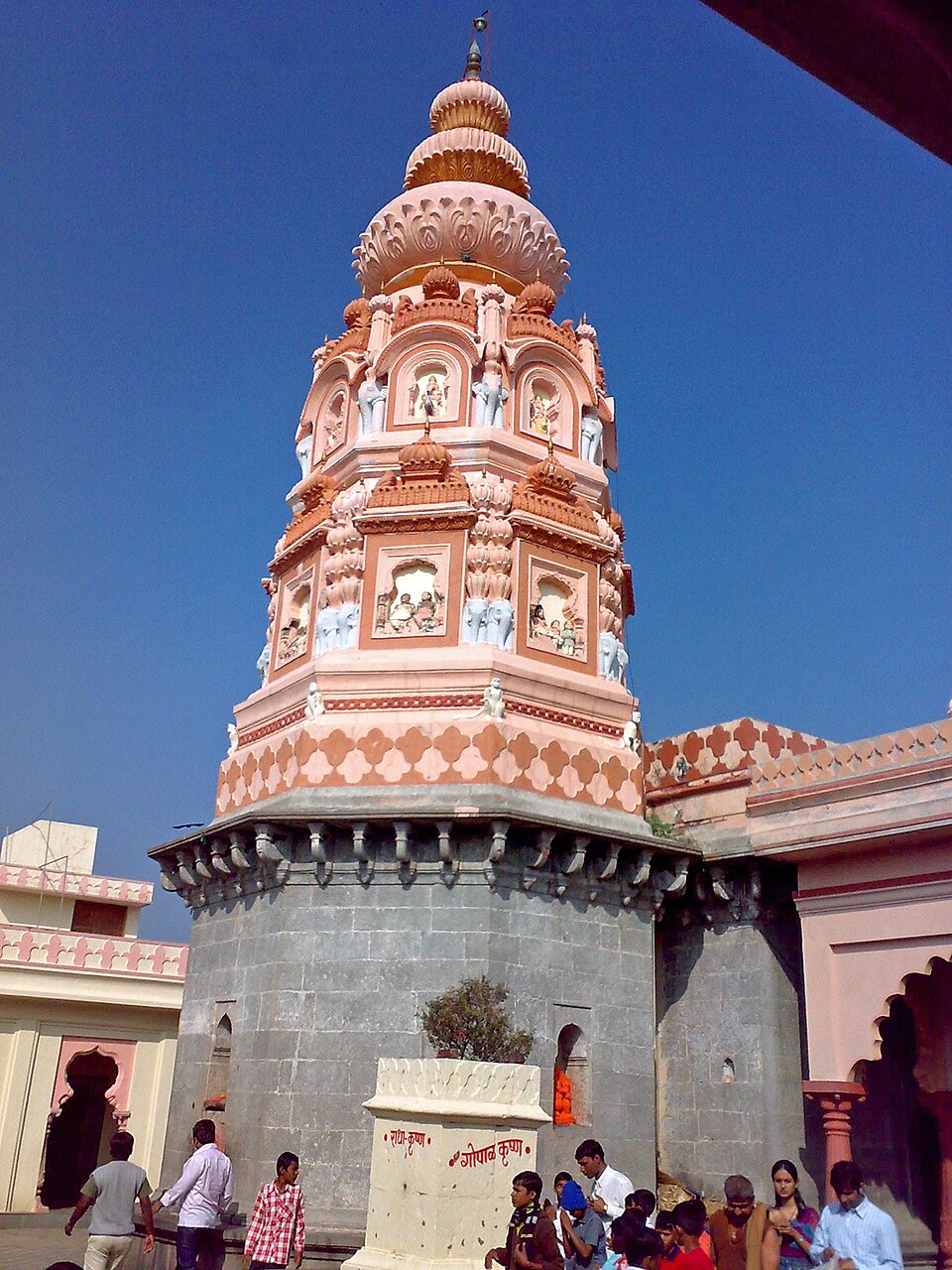
Shri Mayureshwar Temple, also known as Shri Moreshwar, stands on raised ground in Morgaon, a village on the Karha River. Its tall enclosure and four corner towers give it a distinct outline over the market and village lanes. The temple’s place in the Ashtavinayak tradition and its association with the saint Moraya Gosavi have made Morgaon an important centre of Ganesha worship.
The Chinchwad Devasthan Trust records Moraya Gosavi’s devotion to Mayureshwar and his connection with Chinchwad. The trust recalls his visits on Chaturthi, the fourth day of a lunar fortnight. The story explains the connection devotees make between the temple at Morgaon and the tradition that grew around the saint at Chinchwad.
What to see inside the enclosure
Look at the stone enclosure from the village approach before climbing to the entrance. The corner towers and the central shrine tower are easier to take in from different angles. Near the entrance is the nagarkhana, associated with ceremonial drums. Look for the stone mouse holding a sweet, a detail tied to Ganesha’s mount.
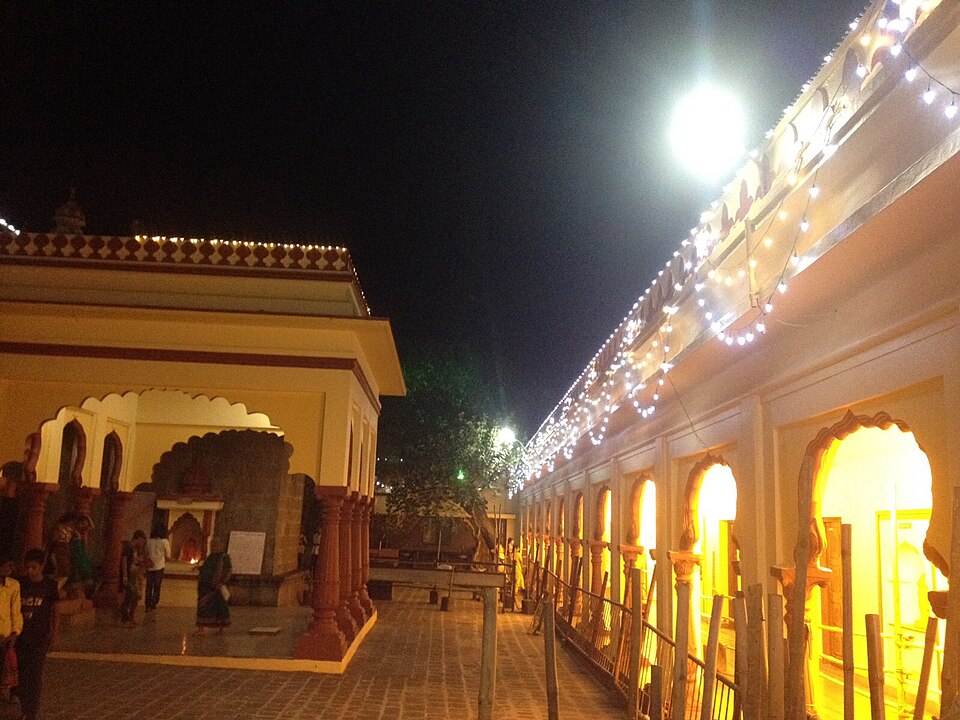
A large stone Nandi faces the shrine. Because Nandi is usually associated with Shiva, its position at a Ganesha temple is an especially interesting feature. The trust also identifies an old tree in the precinct as the Kalpavriksha and links it to Moraya Gosavi’s worship. Observe the hall, adjoining porches and courtyard as separate parts of the temple’s design.
The Ashtavinayak circuit and Ganesha traditions
In the customary Ashtavinayak pilgrimage, devotees start at Morgaon, visit seven other Ganesha shrines and return here to complete the circuit. A visit to Morgaon therefore carries the meaning of departure and return. It can also be made on its own, especially for someone wanting to understand how the eight shrines are connected.
In the temple trust’s account, Ganesha rides a peacock to overcome the demon Sindhu. Mayura means peacock, the source of the name Mayureshwar. The trust also describes a devotional circuit associated with the gates of Morgaon, known as Dvarayatra. The two traditions help explain why worship is associated with the layout of the village as well as the inner shrine.
Planning your darshan
The directions take you to the lane by the northern approach. Follow local signs for parking and allow time for the walk and darshan queue. The temple trust publishes information on its festival calendar and traditions for visitors planning a trip around a Ganapati celebration.