
History of Jejuri Gad
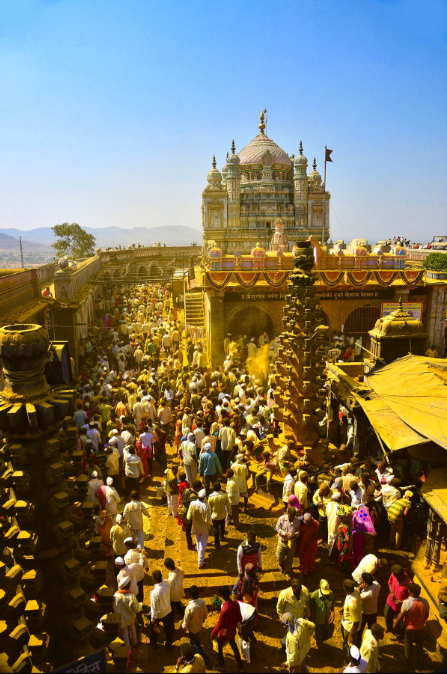
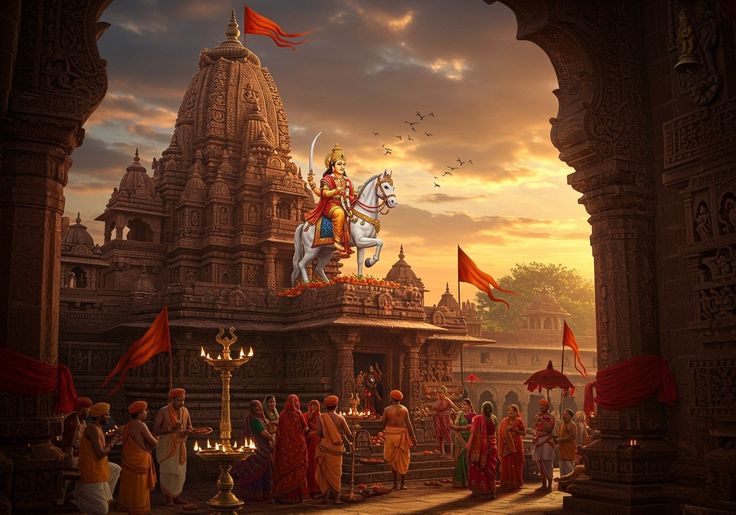
Jejuri’s main Khandoba shrine stands within a fortified enclosure above the town. Maharashtra Tourism traces the temple’s beginnings to the 12th or 13th century and notes major renovations during the 17th century. The complex gained prominence through the Maratha and Peshwa periods. Its gateways, ramparts and spaces for worship show how the hilltop was developed around the needs of a growing pilgrimage.
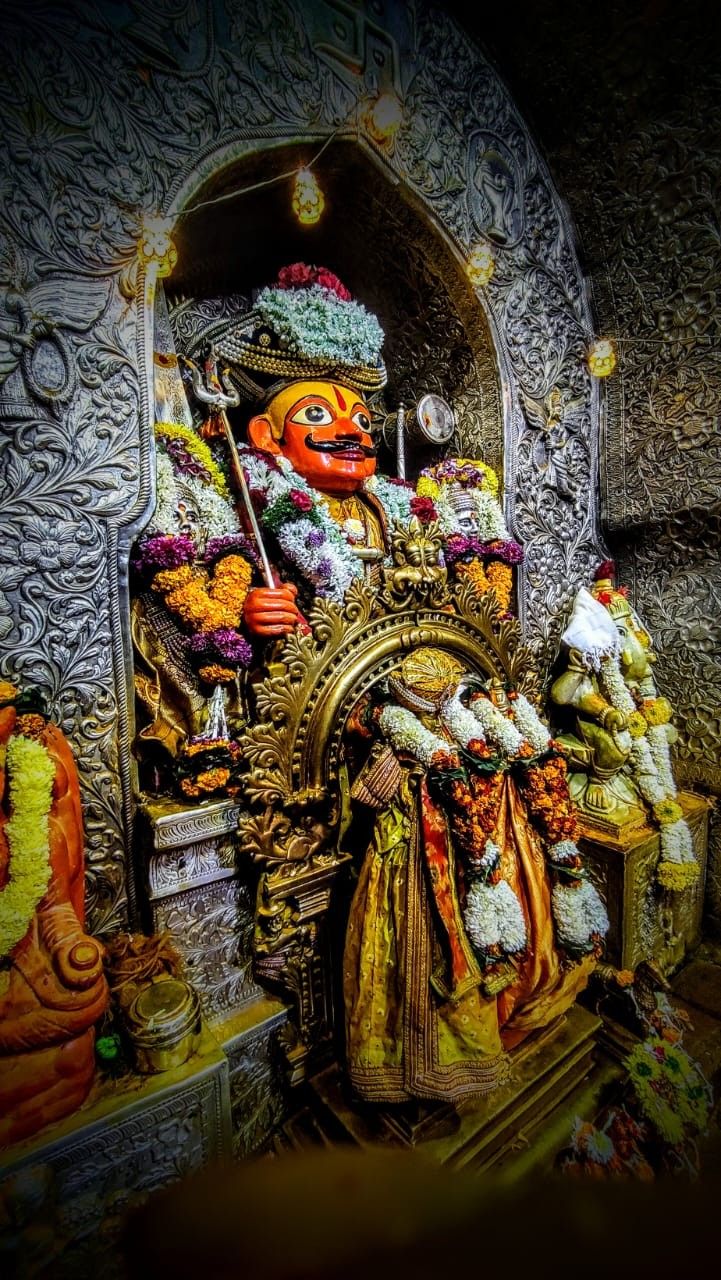
Kadepathar, on a higher ridge southwest of Jejuri Gad, is a separate shrine with its own approach. Local tradition honours it as Khandoba’s original seat. The gallery shows the garlanded idol at Kadepathar as well as scenes from the main complex. The road distance on this page is for Jejuri Gad’s north steps.
What to see on the climb
Pause at the stone gateways and look up at the deepmalas, the tall pillars made to hold oil lamps. From the town, the fort-like enclosure gives the temple its outline. On the way up, the succession of arches and lamp pillars gives a better sense of how the complex was meant to be approached on foot.
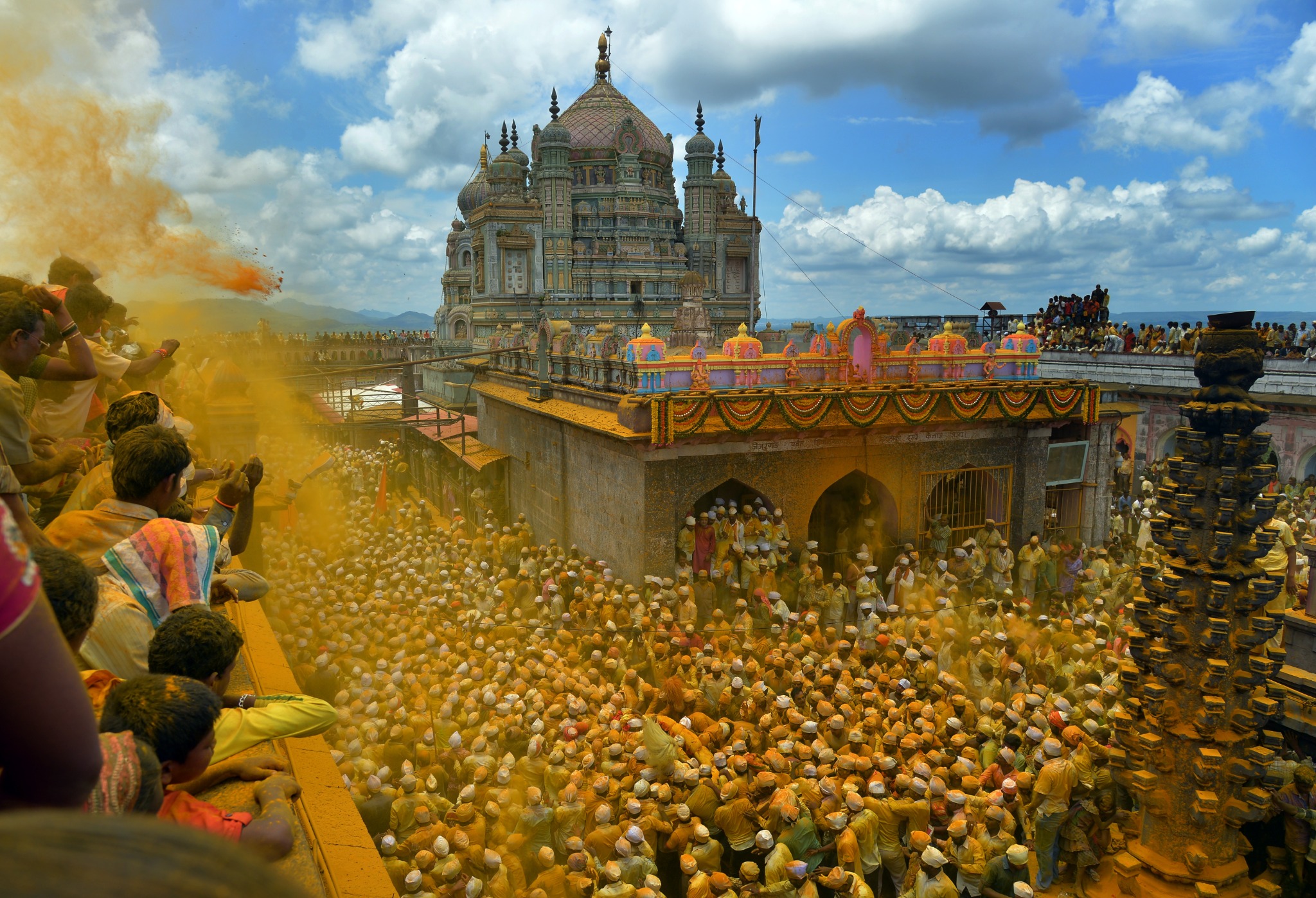
In the courtyard, look for the brass-clad tortoise and the view over Jejuri. The gallery’s photographs show how dramatically the same space changes on a festival day, when turmeric covers the paving and rises above the crowd. The view from the hill also helps place the temple in the landscape of the surrounding ridges.
Khandoba and the tradition of bhandara
Khandoba, also called Malhari Martand, is worshipped as a form of Shiva. Many families in Maharashtra regard him as their kuldaivat, or family deity. His worship has particular importance among farming and pastoral communities. For those families, a visit to Jejuri can be an act of thanksgiving, a family pilgrimage or a chance to seek blessings together.
Champa Shashthi recalls the devotional story of Khandoba defeating Mani and Malla. Devotees offer bhandara, powdered turmeric that gives the temple its golden colour. On Somvati Amavasya, the deity’s palanquin is taken in procession for a ceremonial bath in the Karha River. The procession connects the hill shrine to the streets and river below.
Planning your darshan
The walk begins at the north steps. Leave time for both the climb and the darshan queue, especially during festivals. If anyone in your group needs help with steps or access, check current arrangements with the temple before travelling. Plan Kadepathar as a separate visit if you want to see both shrines.