
History of Shri Changavateshwar Mandir
The shrine stands by the Karha on the road out of Saswad towards Narayanpur. It is also known as Shri Wateshwar. Marathi accounts describe an old Shiva shrine and connect it with the yogi Changdev. In local tradition, Changdev established worship here. Devotees describe the form of Shiva at the temple as swayambhu, meaning that it is understood to have manifested on its own.
The stone construction is often described as Hemadpanti, a term associated with a tradition of masonry used in the Deccan. Its approach, Nandi pavilion, assembly hall and sanctum are recognisably different spaces. They give a sense of how the temple builders guided worshippers from the yard towards the inner shrine.
What to see in the stonework
Start with the two deepmalas, or lamp towers, near the front of the temple. In the Nandi pavilion, take a closer look at the carved bull and the ornaments around its neck. The pillars carry scenes of wrestlers, dancers and a woman churning buttermilk alongside plant and animal motifs. They record ordinary activities as well as religious imagery.
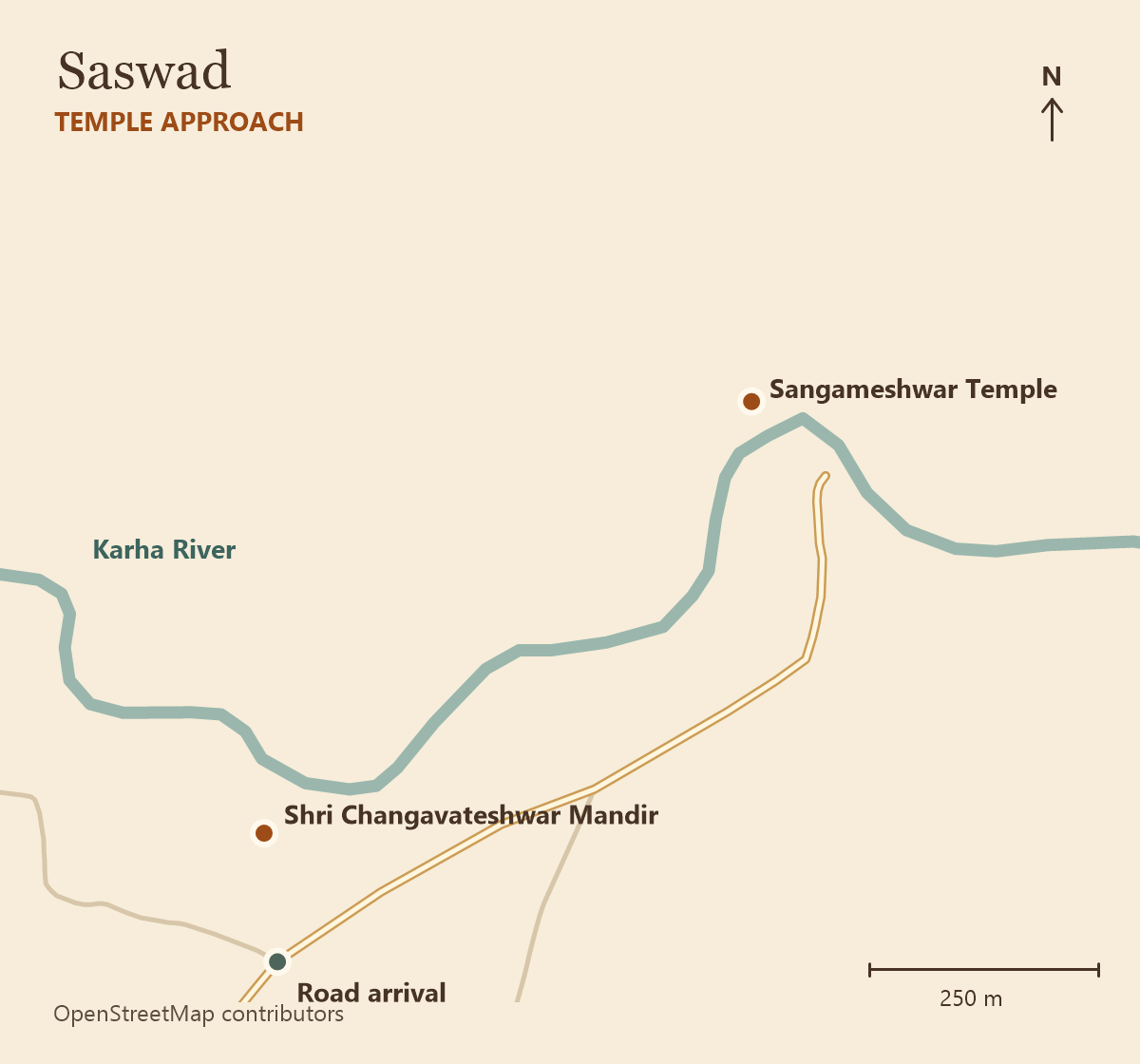
The assembly hall gives you a chance to look at how the pillars support the space as well as how they are decorated. In the enclosure, look for the carved stone Tulsi planter. The river is close by, and the approach map shows how the temple sits in relation to the Karha and to Sangameshwar farther along the river.
Changdev and the Wari tradition
The temple’s association with Changdev makes it part of Saswad’s living devotional heritage. In the annual Ashadhi Wari, the Changavateshwar Maharaj palkhi leaves Saswad for Pandharpur. A palkhi is a ceremonial palanquin. Groups of pilgrims, known as dindis, accompany the procession with devotional singing as it travels from one halt to the next.
That gathering connects the small temple precinct to a pilgrimage shared across Maharashtra. The temple remains a place for Shiva worship at other times of the year. Its position by the river and its long history of use also make it a fitting companion to a visit to Sangameshwar.
Planning your visit
Use the map to locate the road junction and follow local signs for the final approach. Changavateshwar and Sangameshwar can be visited on the same outing. Give yourself time inside the pillared hall and follow the shrine’s guidance about photography and access to the sanctum.