
History of the Bhuleshwar complex
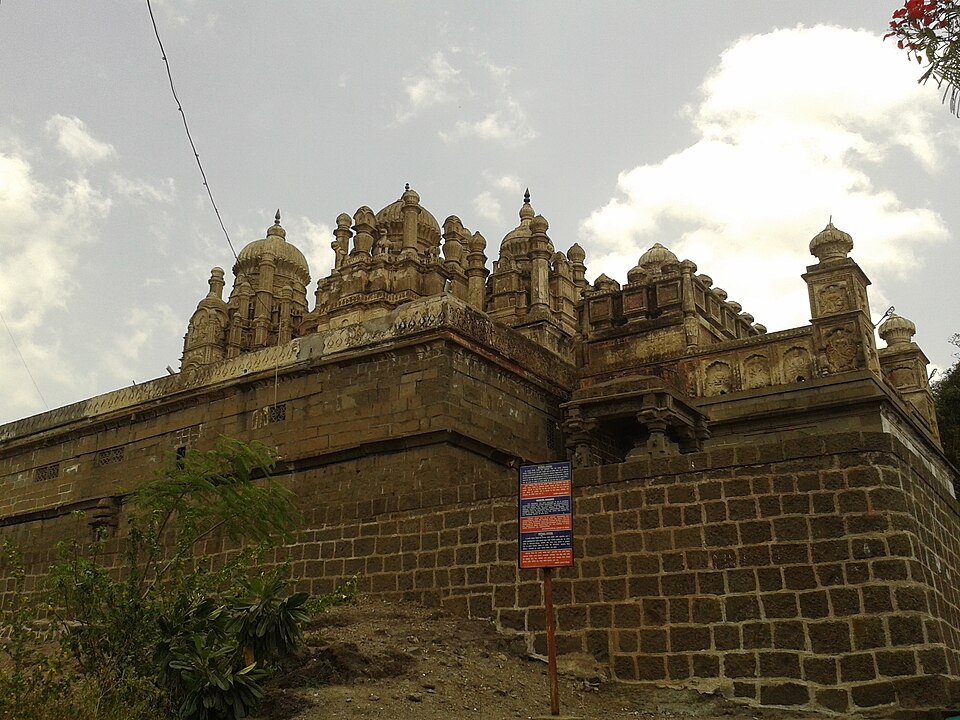
Bhuleshwar stands above Malshiras, near Yawat, within a stone enclosure that gives the hilltop complex its fort-like outline. The National Culture Fund dates the Shiva temple to around the 14th century and describes its construction in stone with lime mortar. The sabhamandapa, or assembly hall in front of the shrine, was added later.
The building’s history is visible in the relationship between these parts of the complex. From the approach, the enclosure dominates the view. Near the shrine, the towers, assembly spaces and carved panels come into focus. The temple is a nationally protected monument, and the Archaeological Survey of India and the National Culture Fund have been involved in its conservation.
What to see in the hall and carved panels
Stop near the top of the approach to look at the silhouette of the walls and towers. Then go closer to the temple and look at the stone panels around the exterior and along the covered passages. Some groups of figures can be followed across a band of carving. Other details are easy to miss unless you pause at the edges of pillars and doorways.
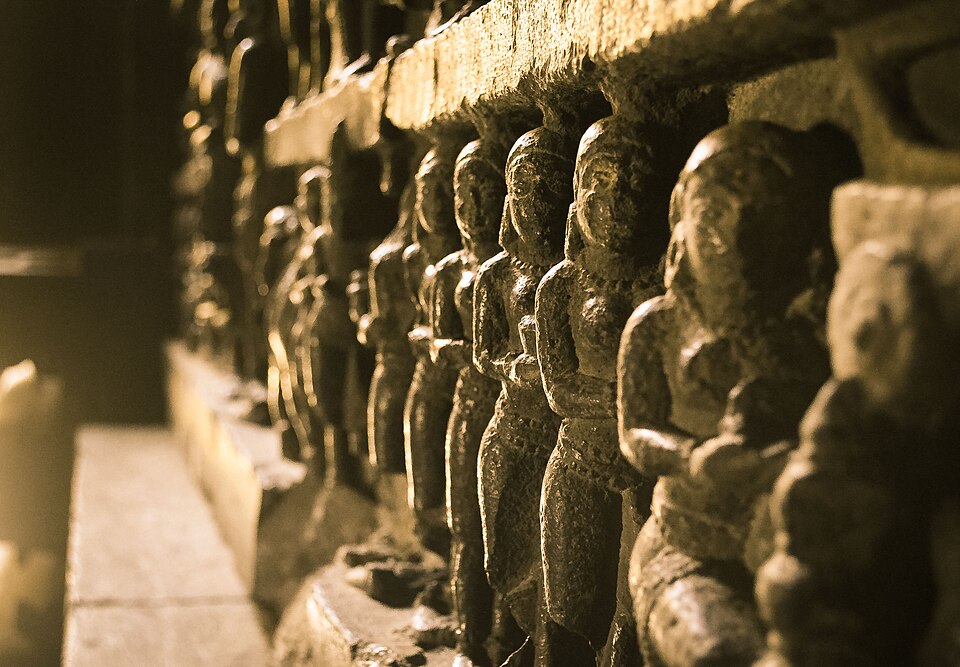
Look especially at the figures’ posture, hand positions and the ornaments carved around them. Changes in light make fine details clearer from different angles. The gallery’s close-up shows how the stone figures sit in rows, with the relief work becoming more apparent when daylight strikes the wall from the side.
Why Bhuleshwar matters in Maharashtra
Bhuleshwar is a Shiva shrine as well as a record of the region’s craft traditions. The Maharashtra State Gazetteer points to the temple for its representation of classical dance poses. Carved gestures preserve something of how movement and performance were understood and represented when the panels were made.
The complex also shows how successive generations could add to a place of worship. The later hall changed the experience of approaching the shrine, while the carved exterior preserves an earlier part of the building’s history. The protected setting helps visitors see how architecture, religious practice and the work of stone carvers are connected.
Planning your visit
The directions lead to the end of the mapped approach road. Continue on foot to the entrance and leave time to look around the exterior. Good daylight helps when viewing the carvings. Follow posted instructions for access and photography, especially in the worship areas.